Story Collections

Dive into themed diary collections when you’re ready, from deepest grief to slow healing.
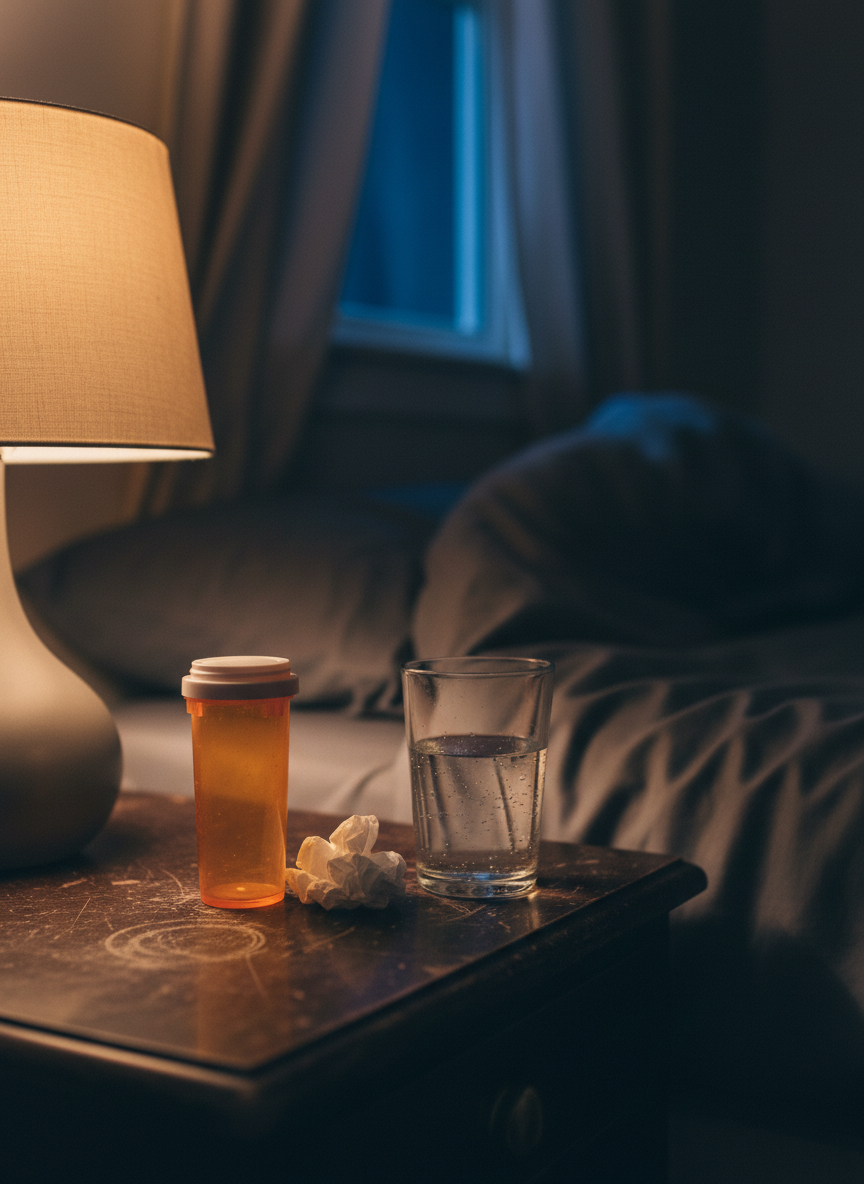
A small bedside table holds an amber prescription bottle, a crumpled tissue, and a glass of water filled halfway, tiny bubbles clinging to the glass. The table surface is scratched dark wood, illuminated by the soft, warm glow of a single lamp with a beige shade. In the blurred background, a rumpled dark-gray duvet and a slightly open curtain reveal a slice of midnight-blue sky. Photographed in photographic realism from a slightly elevated angle, with a shallow depth of field isolating the objects, the mood is intimate, vulnerable, and nonjudgmental, representing mental health struggles, insomnia, and quiet nightly battles that are usually kept hidden.
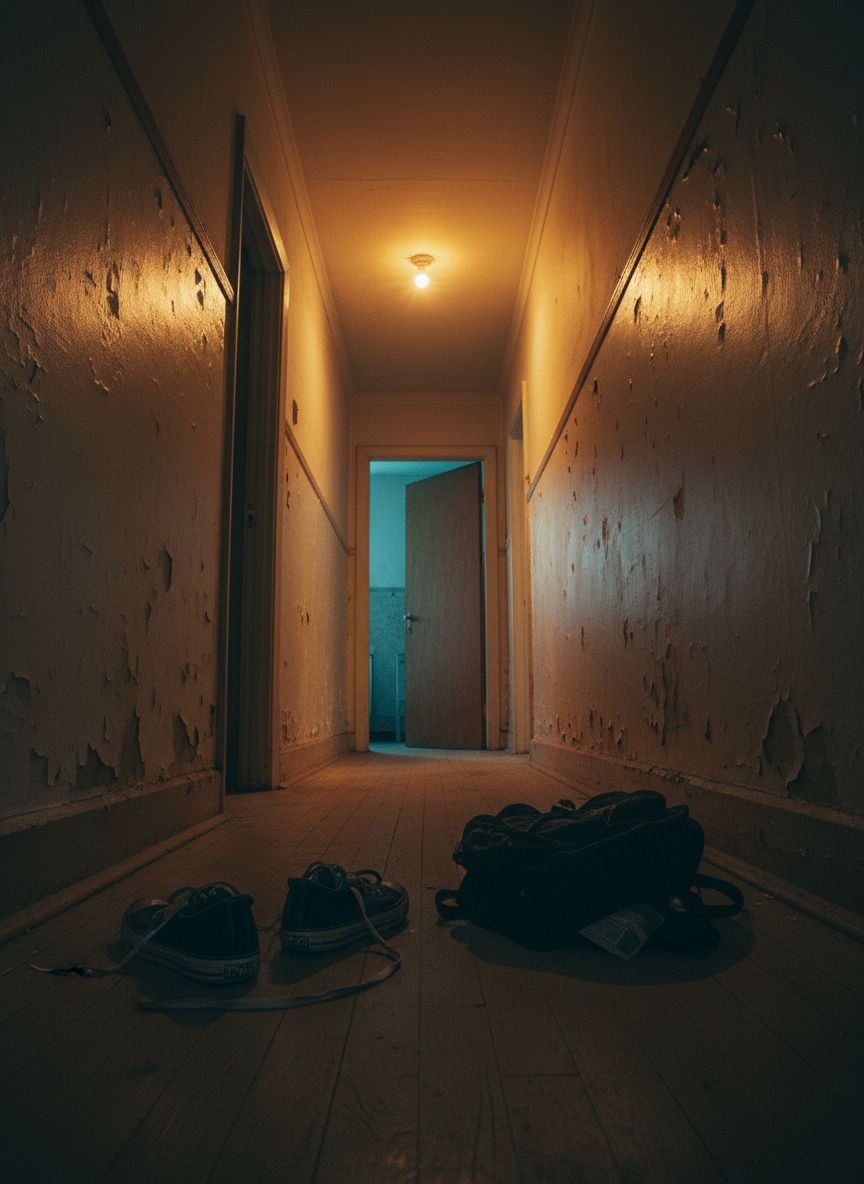
A narrow hallway in an old apartment is photographed in moody, cinematic realism: peeling off-white paint, scuffed baseboards, and a single half-open doorway at the end. Under a warm, flickering ceiling light, a pair of untied, worn black sneakers and an empty, toppled backpack lie in the foreground on dull wooden flooring. Shadows collect heavily in the corners while a faint cool light seeps from the partially open door, hinting at another room beyond. Captured from a low-angle perspective with a strong leading-line composition, the scene feels tense yet honest, reflecting family separation, addiction, and the threshold between chaos and the possibility of change, without showing any people.

Choose the Storms You Enter

Browse chapters by theme—grief, addiction, family, healing—so you can lean into what speaks to you and skip what feels too raw today. Each section is clearly labeled with gentle notes about possible emotional triggers.

Chapters

Follow each chapter’s posts in order, like turning pages.

A small bedside table holds an amber prescription bottle, a crumpled tissue, and a glass of water filled halfway, tiny bubbles clinging to the glass. The table surface is scratched dark wood, illuminated by the soft, warm glow of a single lamp with a beige shade. In the blurred background, a rumpled dark-gray duvet and a slightly open curtain reveal a slice of midnight-blue sky. Photographed in photographic realism from a slightly elevated angle, with a shallow depth of field isolating the objects, the mood is intimate, vulnerable, and nonjudgmental, representing mental health struggles, insomnia, and quiet nightly battles that are usually kept hidden.

Each chapter opens with a quiet image or line—a hallway, an empty chair, a midnight sky—to set the mood and prepare you for the kind of storm you’re about to step into.

A narrow hallway in an old apartment is photographed in moody, cinematic realism: peeling off-white paint, scuffed baseboards, and a single half-open doorway at the end. Under a warm, flickering ceiling light, a pair of untied, worn black sneakers and an empty, toppled backpack lie in the foreground on dull wooden flooring. Shadows collect heavily in the corners while a faint cool light seeps from the partially open door, hinting at another room beyond. Captured from a low-angle perspective with a strong leading-line composition, the scene feels tense yet honest, reflecting family separation, addiction, and the threshold between chaos and the possibility of change, without showing any people.

Let the visuals breathe between heavy paragraphs: blurred city lights, hospital corridors, old family photos—small anchors that hold the weight of each diary theme without needing any extra explanation.